
TThe Institute of Physiology of the Czech Academy of Sciences (IPHYS) is one of the leading research institutions in the Czech Republic (http://fgu.cas.cz). Its primary mission is to elucidate the mechanisms underlying the development of major human diseases, including vascular and cerebrovascular disorders, ischemic heart disease, diabetes, hereditary metabolic disorders, and neurodegenerative diseases. Francesc Villarroya has been appointed as a member of the IPHYS International Advisory Board (IAB-IPHYS), an independent body composed of five internationally recognized scientists. The board’s main objective is to support the development of IPHYS’s research strategy, enhance its international collaboration and visibility, and promote its participation in large-scale international projects.


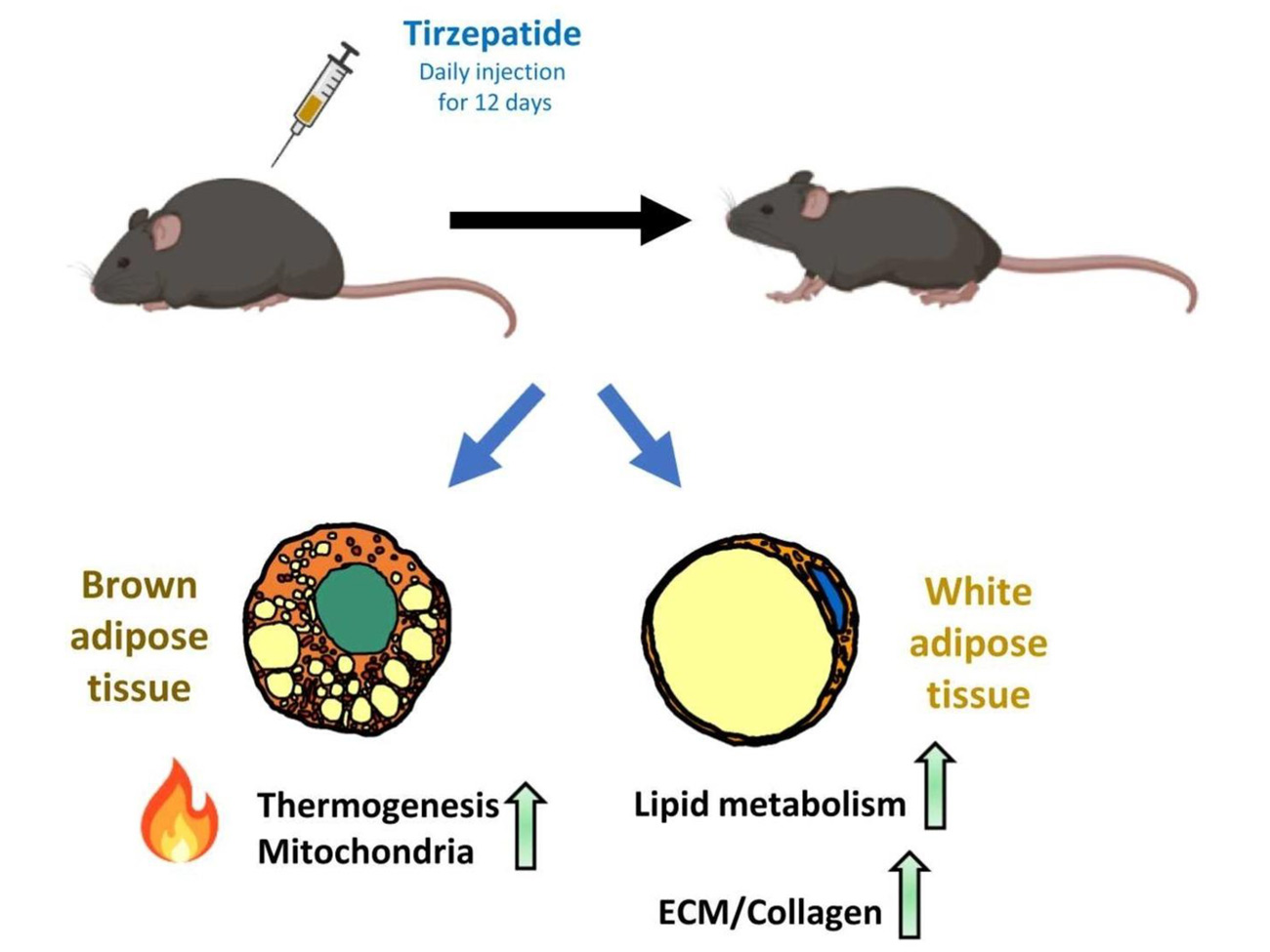
Tirzepatide is one of the drugs that has revolutionized the treatment of obesity and other conditions such as diabetes in recent years. Despite its clinical success, its precise molecular and cellular mechanisms are still not fully understood. Our study in mice, led by Dr Marion Peyrou, shows that the drug has a direct impact on improving metabolism by activating brown adipose tissue. Our results, published in the February 2026 issue of Biomedicine and Pharmacotherapy (DOI: 10.1016/j.biopha.2026.119057) help to better understand the mechanisms of action of tirzepatide and open up new avenues for developing more comprehensive treatments for obesity and other metabolic diseases.


As the body ages, the activity of brown adipose tissue declines, contributing to an increased risk of cardiometabolic disease. A study led by Joan Villarroya and colleagues in our research team has identified chaperone-mediated autophagy as a key molecular mechanism underlying the decline in brown adipose tissue activity with aging. This discovery opens new avenues for developing strategies to enhance the function of this tissue and help prevent chronic metabolic and cardiovascular diseases in an aging population. The study was published in Science Advances (DOI: 10.1126/sciadv.ady0415) and was carried out in collaboration with the team of Ana María Cuervo at Albert Einstein College of Medicine in New York.


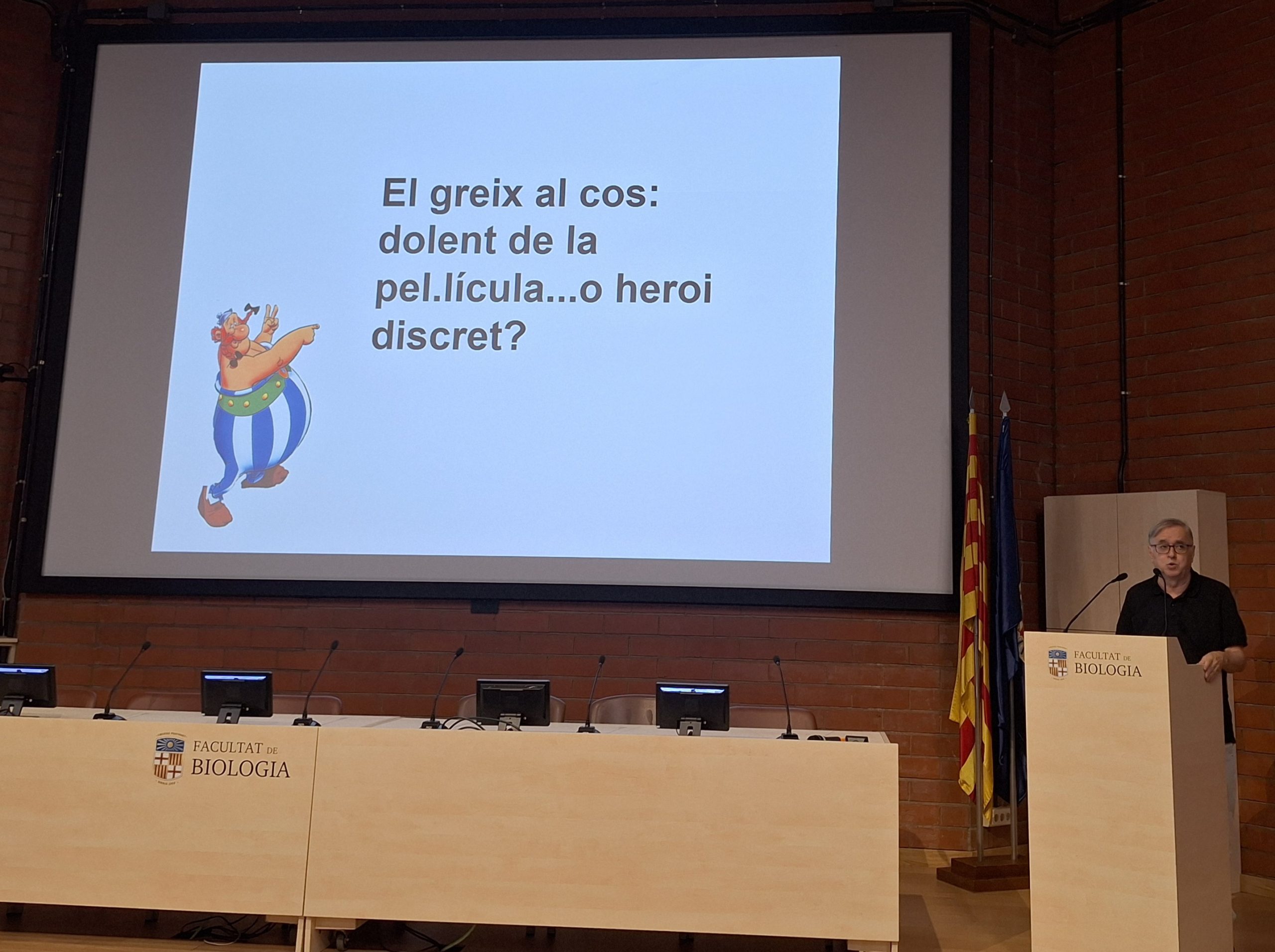
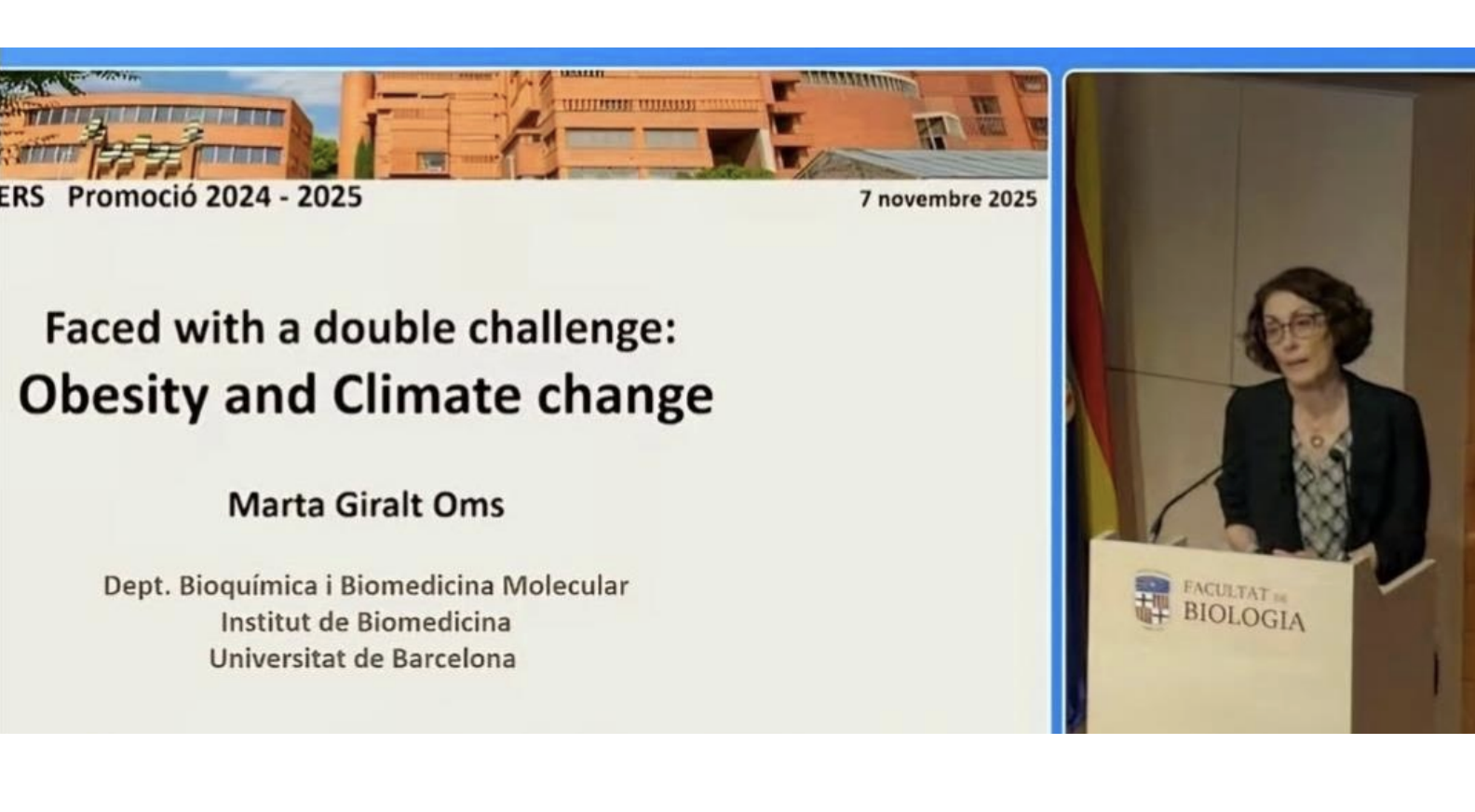
On the occasion of her appointment as patron of the 2024–2025 graduating classes of the Master’s students at the Faculty of Biology of the University of Barcelona, Marta Giralt presented on November 7 the current knowledge on the interrelationship between climate change and obesity, as well as our group’s research on this topic.


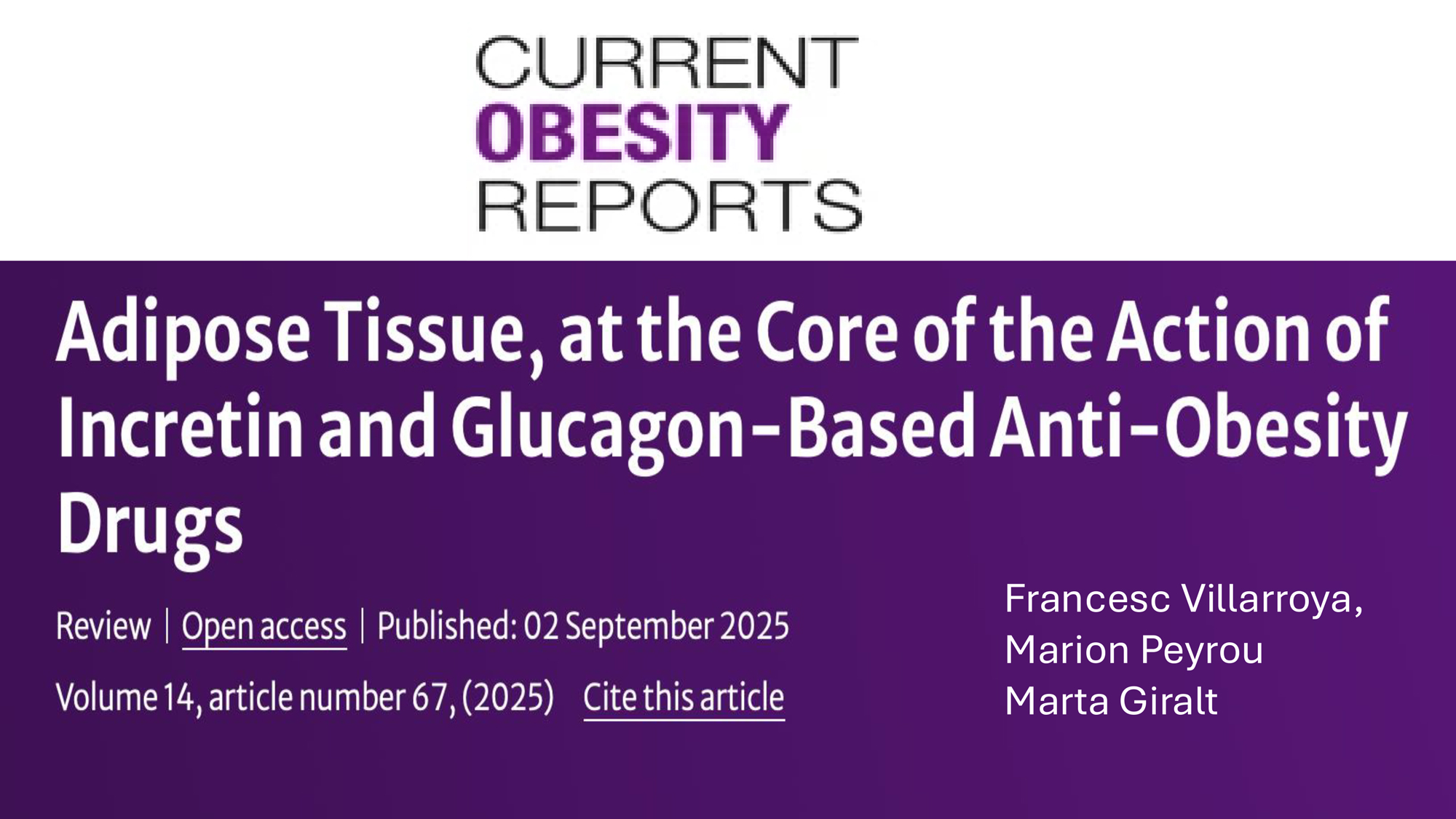
The development of anti-obesity drugs based on incretin agonists is revolutionizing obesity treatment. An analysis of the effects of these drugs, carried out by F. Villarroya, M. Peyrou, and M. Giralt, emphasizes the importance of adipose tissue and its plasticity in the biological response to these medications. The study has been published in Current Obesity Reports, a leading journal in establishing the state-of-the-art in obesity research.


People living with HIV under antiretroviral treatment show enhanced cardiovascular risk. A recent study by our team, led by Tania Quesada, Marta Giralt and Ruben Cereijo in collaboration with Pere Domingo from Hospital de la Santa Creu i Sant Pau, highlights the potential of abnormally reduced CXCL14 levels as a subclinical biomarker of cardiovascular disease in people living with HIV. The study has just been published in the European Journal of Pharmacology (Volume 1003, 15 September 2025, 177996 ). Click here for access to the video provided by the Cell Biologist platform, summarizing these findings.


The successful treatment of HIV through combinations of antiretroviral drugs significantly improved patient outcomes but earlier therapies had the unintended side effect of causing lipodystrophy. In recent years, the development of less toxic drugs has reduced the incidence of lipodystrophy, but growing evidence suggests that newer treatments may promote obesogenesis in people living with HIV. Marta Giralt addressed this topic as a speaker at the seminar “Metabolic Disorders in People with HIV: From Basic to Clinical,” organized by GeSIDA, the study group of SEIMC (Spanish Society of Infectious Diseases and Clinical Microbiology), focused specifically on HIV infection and related conditions. In her presentation, Dr. Giralt shared our team’s long- standing research on adipose tissue alterations in people living with HIV.


Our team contributed several relevant insights from our research to the ECO 2025 congress, an international event that brought together over 4,000 participants in Málaga. Francesc Villarroya delivered an invited lecture on recent advances regarding the relationship between brown adipose tissue, obesity, and aging. Carla Franco and Joan Villarroya presented their latest findings on the role of adipose tissue autophagy in obesity, while Marion Peyrou shared her experimental studies on the action of tirzepatide, a next-generation drug targeting obesity. Finally, Albert Blasco gave an oral presentation on the role of ACBP protein as a repressor of brown fat activity and its implications in obesity. In summary, a successful and inspiring contribution to advances in obesity research.


1 2 3 7